
The Future of Corporate Office Design: Workstations
The implementation of hybrid work schemes has been validated, and with it, more companies are opting to transform their office designs. Some are eliminating assigned desks, while others are reducing the capacity of their physical office spaces. If you want to know more about the design elements that have the greatest impact on productivity in these types of spaces, keep reading.
Why Reimagine Office Spaces?
Designing an office is no easy task. It involves considering the number of employees who will use the space, the needs of each user type, employee movement through corridors, and the integration of spaces for concentration, collaboration, and relaxation. Additionally, it’s important to ensure that workers have access to the tools necessary for their tasks.
With the rise of hybrid work, businesses have started questioning the inefficiency of assigning specific desks to employees when they only work in the office a couple of days a week. This has led to a reassessment of resource allocation in the office space.
Why assign a desk to an employee if they will only use it a few days a week?
Leesman, a consultancy and architecture firm based in London, conducted an analysis of 1,322 office spaces to study the impact of removing assigned desks on satisfaction and productivity. The study found that while the companies with the highest levels of satisfaction did not assign desks, the companies with the worst satisfaction levels also did not assign desks.
Upon deeper analysis, Leesman discovered that the key to achieving the highest levels of satisfaction and productivity in the office was not desk allocation but the variety of spaces to which employees have access.
“The key to achieving the highest levels of satisfaction and productivity was the variety of spaces available to employees.”
This same principle was echoed by Gensler in their report "10 Workplace Trends for 2025", where they highlighted that the shift to flexible workstations represents a seismic change in how office spaces are used. Instead of assigning a desk to each employee for daily use, workstations are flexible spaces that can be used by anyone, as needed, throughout the day. This approach creates dynamic and collaborative environments, allowing employees to choose the best place for their tasks (or mood), whether it's a private corner for focused work, a collaborative area for meetings, or a comfortable room for casual interactions. By optimizing space and encouraging mobility, flexible workstations make the office more interactive and effective, whether employees are in the office or working remotely.
Two Paths for Designing a Modern Office
For companies committed to creating highly productive offices that also prioritize employee well-being, there are two options when transforming their office environments:
Building Fixed Structures:One option is to build permanent structures, pausing office operations while determining the long-term configuration of the space. In this scenario, the designer’s vision and the architect's skills will either create a timeless, highly productive space or result in an impractical office with poor acoustics, only partially fulfilling its purpose.
Implementing Dynamic Solutions:The second option is to implement modular solutions that can be installed quickly without pausing office operations. These solutions provide certainty in terms of privacy and functionality, while also offering the flexibility to reconfigure spaces in the future as new employee needs or changes in collaboration arise.
Modular Solutions: A Flexible, Adaptable Approach
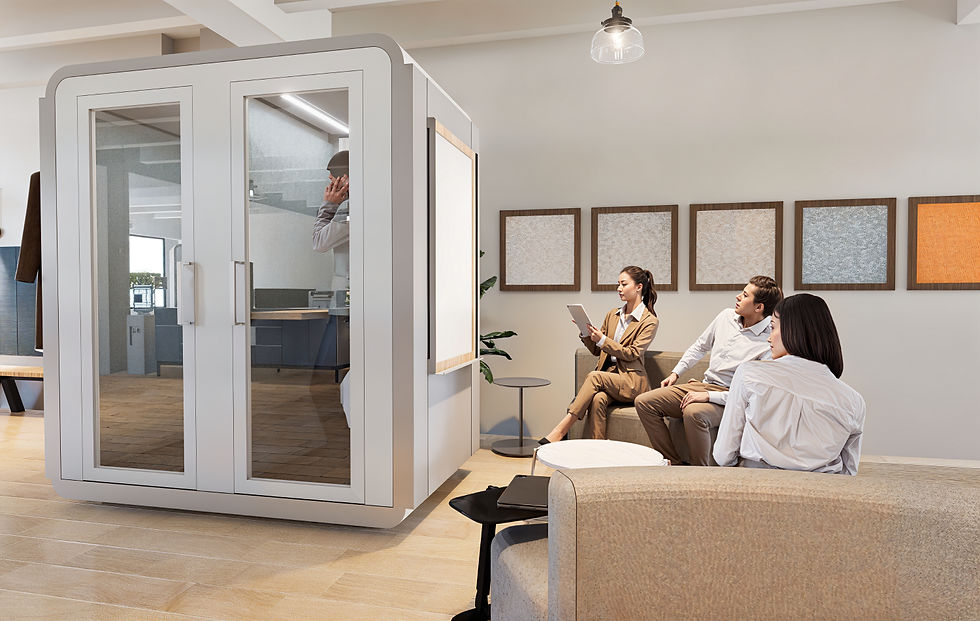
Doppio Riparo Pod with Modular External Accessories System
The Doppio Riparo is an example of a modular soundproof pod that can be equipped with external accessories, offering companies a dynamic and flexible way to create private, quiet spaces without disrupting existing layouts. This kind of design allows for rapid installation and reconfiguration as office needs evolve.
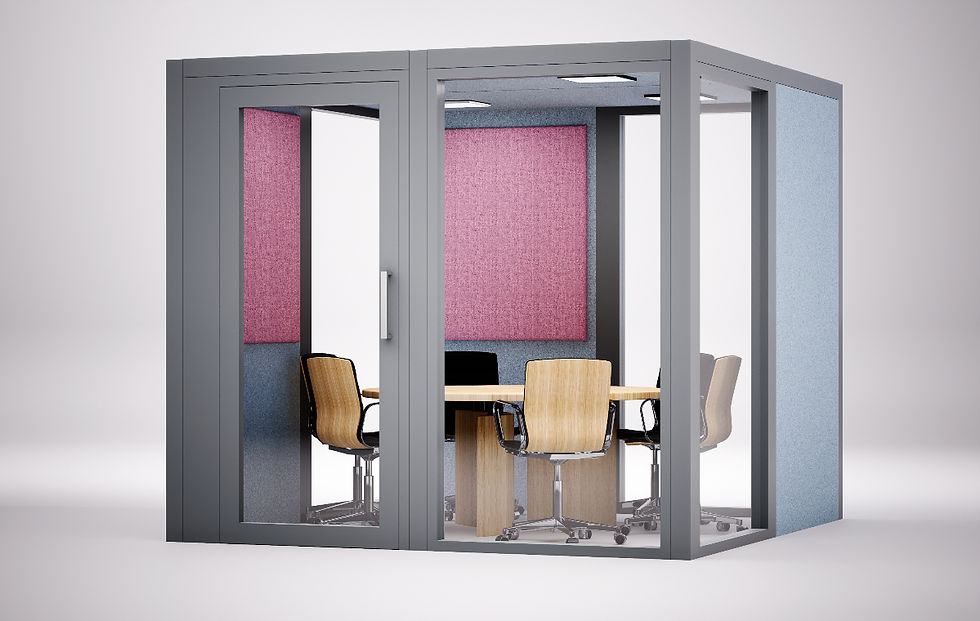
Essenza Modular System (2x2 Configuration)
The Essenza modular system offers a highly adaptable solution for medium-sized meeting rooms. By using modular components, companies can create spaces that are easily reconfigured to accommodate different numbers of people, varying collaboration styles, and changing organizational needs. This is an ideal solution for companies that require flexible, scalable meeting areas without committing to permanent construction.
Why Choose Flexibility in Office Design?
Adaptability to Changing Needs:As the nature of work continues to evolve, employees’ needs will change as well. Opting for flexible solutions such as modular systems and soundproof pods ensures that office spaces can evolve in response to these changes, providing maximum utility for every square meter of office space.
Cost-Efficiency and Minimal Disruption:Unlike fixed construction, modular systems can be installed quickly without halting office operations. This is particularly beneficial for businesses that need to maintain normal day-to-day functions while updating their office layouts.
Enhanced Productivity and Well-being:By providing employees with a variety of workspaces—ranging from quiet pods for concentration to collaborative areas for brainstorming and meetings—companies can improve both productivity and employee satisfaction. Modular designs allow for easy customization of spaces based on the specific needs of teams or individuals, contributing to a healthier, more engaging work environment.
The Future of Corporate Office Design: Workstations
For companies looking to stay ahead of the curve, incorporating flexible workstations into the office design is crucial. These stations should be adaptable to accommodate various working styles, whether it's for solo-focused work, team collaboration, or casual discussions. The key is to create a dynamic environment where employees can select the perfect workspace based on their tasks or state of mind.
As the world of hybrid work continues to evolve, offices that prioritize flexibility, privacy, and comfort will be the most successful in fostering productivity, creativity, and employee well-being.
In Conclusion:
The future of office design is rooted in flexibility and adaptability. By embracing modular solutions like soundproof pods and workstations, companies can create spaces that are not only functional but also inspiring and dynamic. These flexible solutions help businesses optimize their office space, accommodate diverse employee needs, and adapt to changing work styles, ultimately promoting higher productivity and a stronger, more engaged workforce.